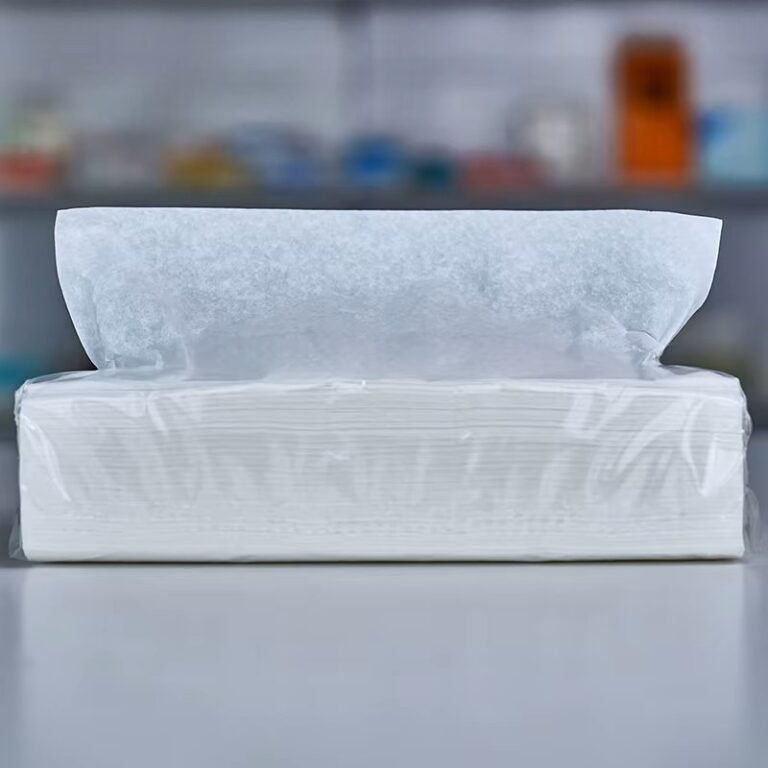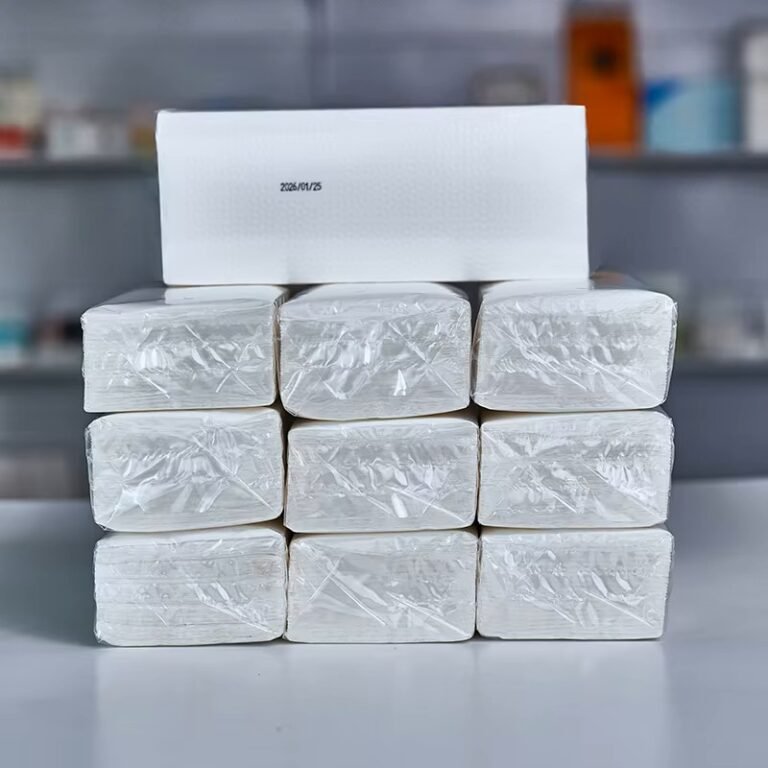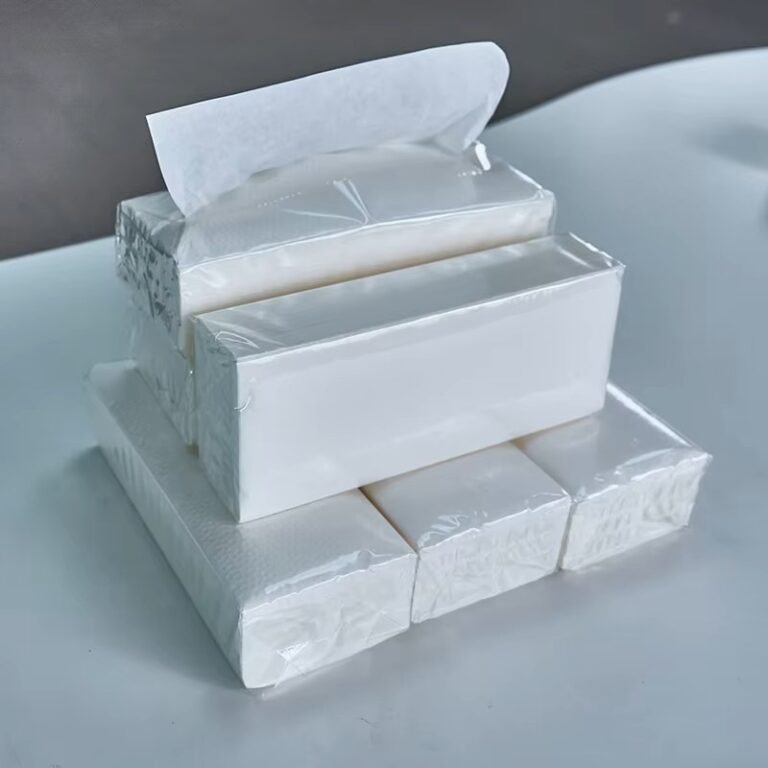
Walk into any public restroom and the hand towel dispenser on the wall tells you which fold type the facility chose. You probably never noticed. The facility manager noticed — or should have — because the fold type determines how the towel dispenses, how much paper each user pulls, and how much the facility spends annually on consumables.
There are five fold types in commercial use today: V-fold (single-fold), C-fold (multi-fold), Z-fold (interfolded), M-fold (double multi-fold), and roll (centrefeed). Each works with specific dispenser hardware, and swapping fold types means swapping dispensers. This guide maps each fold to its ideal use case so that facility suppliers and janitorial distributors can match the right product to the right location.
Key Takeaways
- Five hand towel fold types serve different dispenser systems: V-fold, C-fold, Z-fold, M-fold, and roll (centrefeed).
- V-fold is the most common worldwide — simple, cheap, and compatible with the widest range of dispensers.
- Z-fold (interfolded) is the hygienic choice for healthcare — each towel dispenses individually without the user touching the next towel in the stack.
- M-fold handles the highest traffic volumes — it holds more towels per dispenser load than V or C fold.
- Roll (centrefeed) is the industrial standard for manufacturing and food processing — one-handed tear, no waste.
- Switching fold types requires switching dispensers — factor the hardware cost into any upgrade decision.
1. V-Fold (Single-Fold): The Universal Default
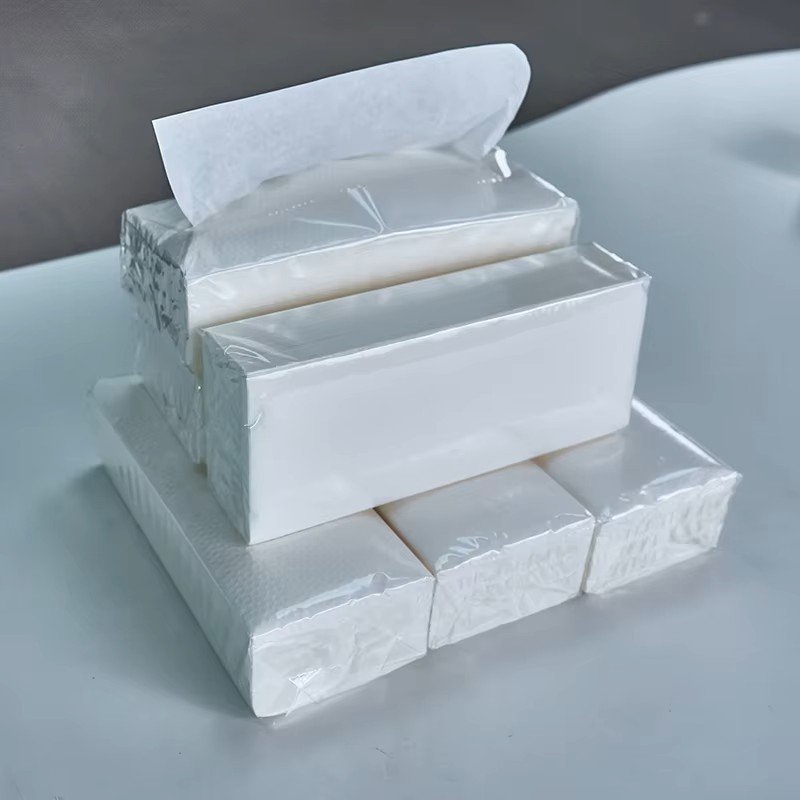
The V-fold is the simplest fold in commercial use. The towel is folded once down the center, creating a V shape. Towels are stacked face-to-back in the dispenser, so when one is pulled, the next one pops up slightly for easy grabbing.
Sheet size: Typically 23 x 23 cm or 23 x 25 cm (single-fold, so the open sheet is roughly twice the folded dimensions).
Ply: 1-ply or 2-ply. 2-ply V-fold is standard for mid-to-premium commercial installations.
Where it works best: General-purpose commercial restrooms — offices, schools, retail stores, restaurants. V-fold dispensers are the most widely installed hardware in the world, and the towels are the cheapest per unit because the fold requires the least converting complexity.
Limitation: In high-hygiene environments, V-fold has a drawback. When a user pulls one towel, their fingers may brush the next towel in the stack. In healthcare or food processing, this cross-contact risk makes V-fold the wrong choice.
2. C-Fold (Multi-Fold): The Flat Profile
The C-fold towel is folded into thirds — the two outer panels fold inward to meet at the center, creating a flat, rectangular towel. They are stacked in the dispenser and dispense one at a time, though unlike Z-fold, the next towel does not protrude for touchless grabbing.
Sheet size: Typically 24 x 24 cm or similar (folded to roughly one-third the open width).
Ply: 1-ply or 2-ply. C-fold is common in 1-ply for economy installations.
Where it works best: Medium-traffic restrooms where a flat, neat dispenser appearance matters. C-fold dispensers tend to have a slimmer profile than V-fold dispensers, which suits compact washroom layouts.
Limitation: Because the next towel does not protrude, users sometimes pull multiple towels in one grab — increasing consumption and waste. C-fold also does not offer the hygienic advantage of Z-fold’s touchless dispensing.
3. Z-Fold (Interfolded): The Hygiene Choice
The Z-fold gets its name from the zigzag fold pattern. Each towel is folded so that one end protrudes from the dispenser opening. When the user pulls that end, the towel unfolds and the next towel’s leading edge advances into the dispensing position — all without the user touching the next towel.
Sheet size: Typically 23 x 25 cm or 24 x 25 cm (open), folded into a compact Z shape.
Ply: 1-ply or 2-ply. 2-ply Z-fold is the standard for healthcare and premium commercial installations.
Where it works best: Healthcare facilities, clinics, laboratories, food processing plants, and any environment where cross-contamination is a concern. The touchless dispensing mechanism is the key advantage — each user touches only their own towel.
Limitation: Z-fold dispensers are more expensive than V-fold dispensers, and the towels cost more per unit because the fold is more complex to convert. For general-purpose restrooms without hygiene requirements, the Z-fold premium may not justify the cost.
Z-fold interfolded towels are closely related to the multifold category. For a broader comparison of multifold options including V-fold and M-fold dispenser compatibility, see our multifold paper towels guide.
4. M-Fold (Double Multi-Fold): The High-Capacity Option
The M-fold is essentially two C-folds nested together — the towel is folded into four panels, creating an M shape when viewed from the end. This compact fold allows more towels per dispenser load than V-fold or C-fold, reducing refill frequency in high-traffic locations.
Sheet size: Typically 23 x 28 cm or 24 x 30 cm (open), folded into a compact 4-panel stack.
Ply: 1-ply or 2-ply. M-fold is available in both, with 2-ply preferred for premium installations.
Where it works best: High-traffic public restrooms — airports, stadiums, shopping malls, convention centers, and large office buildings. The higher capacity per dispenser load means maintenance staff refill less often, which reduces labor cost in facilities with hundreds of dispensers.
Limitation: M-fold dispensers are larger than V-fold or Z-fold dispensers to accommodate the wider folded towel. In compact restrooms, the dispenser’s physical footprint may be a constraint. Like V-fold, M-fold does not offer touchless dispensing — the user’s fingers contact the next towel when pulling.
5. Roll (Centrefeed): The Industrial Standard
Centrefeed roll towels are not folded at all — they are a continuous roll of perforated sheets wound around a core, designed to dispense from the center of the roll. The user pulls the towel from the bottom of the dispenser and tears it along the perforation with one hand.
Sheet size: Typically 20 x 25 cm or 21 x 25 cm per perforated sheet. Roll lengths vary from 150 m to 300 m depending on the dispenser model.
Ply: 1-ply or 2-ply. 2-ply centrefeed rolls are standard for food processing where absorbency and strength matter.
Where it works best: Manufacturing facilities, food processing plants, industrial workshops, and commercial kitchens. The one-handed tear is essential when the user’s other hand is contaminated (holding raw meat, operating machinery). The continuous roll format also eliminates the “empty dispenser” problem — the user can see how much paper remains and alert maintenance before the roll runs out.
Limitation: Centrefeed dispensers are purpose-built hardware — they are not interchangeable with folded towel dispensers. The roll format also produces more waste per user in low-traffic settings because users tend to pull more than they need when the towel tears freely.
For a deeper look at centrefeed roll specifications including roll diameter, core size, and dispenser compatibility, see our centrefeed roll paper hand towels guide.
Matching Fold Type to Facility: A Decision Table
| Facility Type | Recommended Fold | Why |
|---|---|---|
| General office restroom | V-fold | Lowest cost, widest dispenser availability, adequate for low cross-contamination risk |
| Restaurant / cafe | V-fold or Z-fold | V-fold for budget; Z-fold if hygiene visibility matters to customers |
| Hospital / clinic / lab | Z-fold | Touchless dispensing reduces cross-contamination; required by many healthcare procurement specs |
| Airport / stadium / mall | M-fold | High capacity per load reduces refill labor in high-traffic locations |
| Food processing plant | Roll (centrefeed) | One-handed tear for contaminated hands; continuous supply visible to user |
| School / university | V-fold | Cost-efficient, simple to maintain, dispensers widely available |
| Hotel guest bathroom | V-fold (premium 2-ply) | Compact, neat appearance; 2-ply for guest comfort |
Specs That Matter Across All Fold Types
Regardless of fold type, these specs determine the hand towel’s performance:
- Material: 100% virgin wood pulp for commercial hand towels. Recycled fiber produces more dust and lower wet-strength — unacceptable in healthcare and food service.
- GSM: 30–45 GSM per ply for hand towels (higher than facial tissue). The factory’s range covers this fully. Higher GSM means a thicker, more absorbent towel.
- Wet-strength: The factory’s wet-burst strength optimization ensures the towel holds together during hand drying without disintegrating. This is especially critical for centrefeed rolls used in food processing.
- Dust control: The factory’s zero-dust micro-purification process controls paper dust and lint — important in cleanrooms, electronics manufacturing, and healthcare.
All hand towel products from the factory are manufactured from 100% virgin wood pulp with no fluorescent brightening agents, and are food-contact safe. The standard MOQ is 1x 20GP for white-label and 1x 40’HQ for custom printed packaging. First production lead time is 25–30 working days; reorders take 20–25 working days. Shipping from Tianjin Xingang Port.
Switching Fold Types: The Hidden Hardware Cost
The most common mistake facility managers make with hand towels is ordering a different fold type without checking dispenser compatibility. V-fold towels do not fit C-fold dispensers. Z-fold towels do not fit M-fold dispensers. Roll towels require an entirely different hardware platform.
If you are specifying hand towels for a new facility or a refurbishment, choose the fold type first, then select dispensers that match it. If you are taking over an existing facility, check the dispensers already installed and order towels that fit them. Switching fold types across a large facility means purchasing and installing new dispensers for every restroom — a cost that can exceed a year’s towel budget.
For janitorial distributors building a product catalog, stocking V-fold and Z-fold covers the majority of commercial accounts. Add centrefeed rolls if you serve food processing or manufacturing clients. M-fold is a niche addition for airport and stadium contracts.
Frequently Asked Questions
Which fold type is most cost-effective for a general office building?
V-fold. It has the lowest per-unit cost, the widest dispenser availability, and adequate performance for office restroom traffic. Specify 2-ply at 35–40 GSM per ply for a balance of absorbency and economy.
Why do hospitals require Z-fold specifically?
Z-fold’s interfolded design dispenses one towel at a time without the user touching the next towel in the stack. In healthcare settings, this touchless dispensing reduces the risk of cross-contamination between users. Many hospital procurement specifications explicitly require Z-fold or equivalent touchless dispensing for patient-area restrooms.
Can I use the same hand towel spec for food processing and general commercial use?
The material spec (100% virgin wood pulp, no fluorescent agents, food-contact safe) is the same. The fold type differs: food processing typically uses centrefeed rolls for one-handed tear, while general commercial uses V-fold or Z-fold. If you need a single product for both, V-fold in 2-ply with high wet-burst strength works in both environments — but you lose the one-handed advantage of centrefeed in the processing area.
What is the typical case count for hand towels by fold type?
Case counts vary by manufacturer and fold type. V-fold typically packs 200–250 towels per case (4–6 packs of 40–50). Z-fold packs 200–300 per case. M-fold packs 150–200 per case (the towels are larger when folded). Centrefeed rolls ship by the case of 6 or 12 rolls. Always confirm case count and packs-per-case against your dispenser loading pattern to calculate cost per dispense.